Southwest's Free Checked Bag Is Gone: What It Means for Every Traveler
Southwest ended its 50-year free bag policy in 2025. Here is what the new baggage fee structure looks like, who is affected, and how it changes the math on booking Southwest.
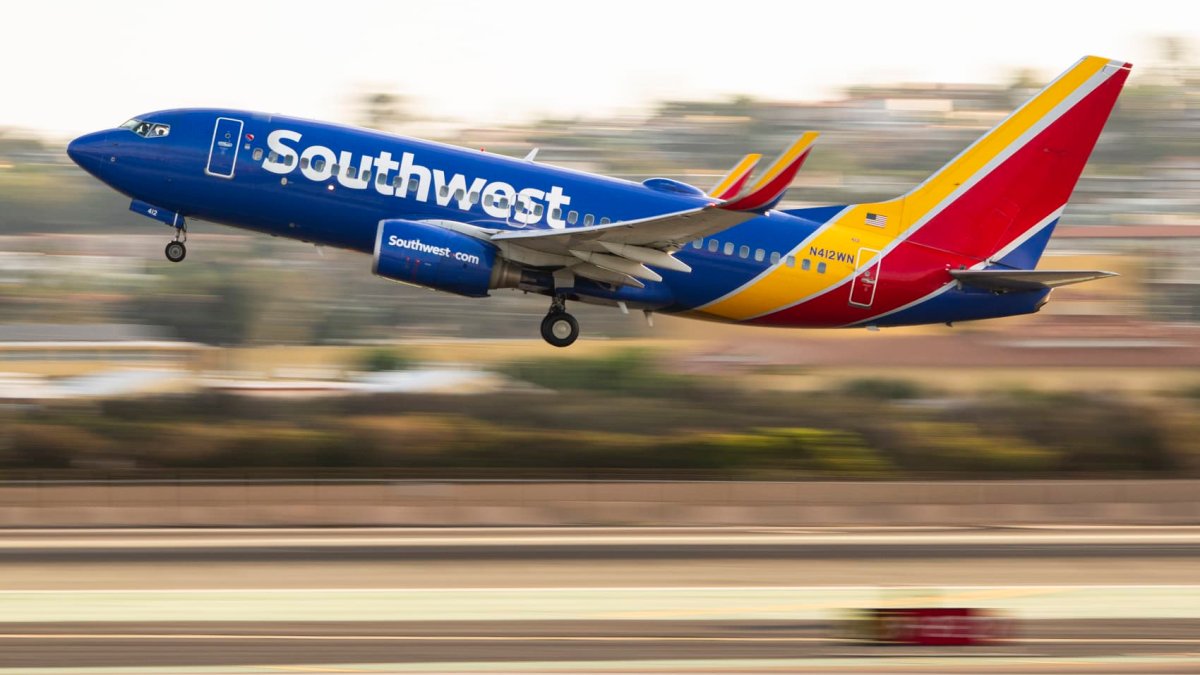
For more than 50 years, two free checked bags were the thing that made Southwest Airlines different. No fine print, no status requirements, no credit card you had to carry: just two bags, free, every time. That era ended in 2025. Southwest now charges for checked baggage on most bookings, joining every other major US carrier in the fee structure that travelers have complained about for two decades.
Here is what the new policy looks like, who still gets a pass, and what it actually means when you compare Southwest's total cost against the competition.
What Southwest Changed and When
Southwest announced the end of its free bag policy in early 2025, with fees taking effect for tickets purchased after May 28, 2025. The move was part of a broader restructuring push as the airline faced pressure from activist investors and declining unit revenue. The policy had been a core brand differentiator since Southwest's founding, so dropping it was not a small decision.
The new fee structure: $35 for the first checked bag and $45 for the second, each way. That is $70 round-trip for one bag, or $160 round-trip if you check two. Those numbers are roughly in line with what American, Delta, and United charge, though Southwest's fares sometimes ran higher than competitors partly because the bag fees were already baked into the price in traveler expectations.
Who Is Still Exempt
Not everyone pays. Southwest carved out exemptions for a defined group of travelers:
If you do not fall into one of those categories, you are paying the new fees.
What This Does to the Price Comparison
The honest answer is that Southwest's pricing advantage, which was already narrower than it looked, is now harder to see. Consider a typical scenario: two travelers flying round-trip, each checking one bag. Under the old policy, that trip on Southwest cost whatever the base fare was, full stop. Under the new policy, add $140 in bag fees ($35 per person, per direction, times two people).
Run that same trip on Delta or American, and you are paying roughly the same bag fees, assuming no status or eligible credit card. The total cost comparison now depends almost entirely on which airline has the lower base fare on your specific route, which changes constantly.
Southwest still has structural advantages in certain markets: it operates point-to-point rather than hub-and-spoke, which means more nonstop options on routes other carriers fly with a connection. It also has a more flexible change and cancellation policy than most competitors. But "free bags" is no longer on the list.
How Southwest Now Compares to Ultra-Low-Cost Carriers
The more interesting competitive shift is at the bottom of the market. Spirit, Frontier, and Allegiant built their model around bare-minimum base fares with fees for everything, including carry-on bags on some bookings. Southwest positioned itself as the "honest" alternative, with fees you could actually predict.
Now, Southwest charges for checked bags but still includes one free carry-on and one free personal item with every fare. Spirit and Frontier charge for carry-ons above the personal item threshold. So Southwest is still cheaper than Spirit or Frontier if you need to bring a full-size carry-on, but the gap on checked baggage has closed entirely.
When Southwest Is Still Worth Booking
Southwest makes sense in a few specific situations. If you hold a co-branded Southwest credit card, the math still works in your favor on bags. If you are flying a route where Southwest offers the only nonstop and you value that over a connection, the total cost may still win. And if you value the no-change-fee, no-cancellation-fee policy enough to pay a modest premium, Southwest still offers that where most carriers charge $75 to $200 to change or cancel.
But the era of defaulting to Southwest because bags are free is over. Every booking now requires a full cost comparison that includes bags, fees, and fare flexibility.
Use Farefinda to compare total flight costs across carriers on your route, including Southwest, before you book.
When did Southwest start charging for bags?
Southwest began charging for checked bags on tickets purchased after May 28, 2025. The policy applies to most fare classes, with exceptions for co-branded credit card holders, Business Select passengers, and A-List Preferred status members.
Who gets free bags on Southwest now?
Travelers who hold a Southwest Rapid Rewards co-branded credit card, book Business Select fares, hold A-List Preferred status, or travel as a Companion Pass companion still receive free checked baggage. All other passengers pay $35 for the first bag and $45 for the second, each way.
How does Southwest compare to Spirit and Frontier now on price?
Southwest is no longer cheaper than Spirit or Frontier on checked bags: all three now charge roughly $35 to $50 per bag per direction. Southwest still includes a full-size carry-on free, while Spirit and Frontier charge for carry-ons above the personal item size. On total cost including carry-on luggage, Southwest often remains cheaper than the ultra-low-cost carriers, but the gap is smaller than it used to be.
Paul covers transatlantic routes, airline industry trends, and business travel strategy. He has tracked airfare markets across Europe and North America for over a decade.