Tokyo Travel Guide 2026: Best Time to Visit, Cheap Flights and What to Do
The complete Tokyo travel guide for 2026. Best time to visit, top things to do, where to stay, what to eat, how to find cheap flights to Tokyo and essential practical tips.
Tokyo is the largest city on earth. Nearly 38 million people live in the greater metropolitan area. Yet it is also, somehow, one of the quietest and most orderly cities you will ever visit. The trains run to the second. The streets are clean. Nobody talks on the subway. People queue at marked spots on train platforms and wait for passengers to alight before boarding. This is not a performance for tourists. It is just how the city works.
The food situation is extraordinary. Tokyo holds more Michelin-starred restaurants than Paris and New York combined. Some of the best meals in the city cost under ten dollars. The quality ceiling and the price floor both sit higher than anywhere else on earth.
According to the Japan Tourism Agency, Japan welcomed over 36 million international visitors in 2024, a record. A large share come specifically for Tokyo, and the city's infrastructure handles the volume without visible strain. This guide covers everything you need: when to go, where to stay, what to eat, how to get around, and how to find cheap flights.
Best Time to Visit Tokyo
Tokyo has four genuine seasons and each has a different character.
Cherry blossom season (late March to mid-April) is when the city earns every superlative written about it. Parks, riverbanks, and temple grounds fill with pink and white bloom. Shinjuku Gyoen, Ueno Park, and Chidorigafuchi along the moat are the most photographed spots. The window is short, usually one to two weeks, and the exact dates shift by year. Japan Meteorological Corporation publishes annual forecasts from January. Book accommodation and flights three to four months ahead for this period, or you will be paying a premium for whatever is left.
Autumn foliage (mid-November to early December) is the other visual peak, and it is underrated compared to cherry season. Ginkgo avenues in Shinjuku turn deep gold. Rikugien garden and the grounds around Meiji Shrine go rust and copper. Crowds are smaller, the air is crisp, and the city feels easier to move through.
Spring beyond the bloom (April to May) is genuinely pleasant. Temperatures run 15 to 22 degrees Celsius, humidity stays low, and most cherry blossom tourists have gone home. The one period to avoid in spring is Golden Week, the cluster of public holidays from late April to early May. Domestic travel peaks hard during Golden Week. Trains get crowded, accommodation prices spike, and popular restaurants need bookings well in advance.
Summer (June to August) is hot and humid. July and August regularly reach 33 to 35 degrees Celsius with humidity above 80 percent. Typhoon season brings occasional disruption. The city functions normally, but it is physically demanding. Build air-conditioned time into every day if you visit in summer.
Winter (December to February) is cold, dry, and clear. Snow is rare in central Tokyo. Temperatures usually stay above freezing. Flights and hotels are cheapest in this window, and the city is at its least crowded. Some travellers prefer it for exactly those reasons.
Where to Stay: Tokyo's Key Neighbourhoods
Where you base yourself in Tokyo matters more than in most cities, simply because it is so large.
Shinjuku is the most practical base for first-timers. It is the busiest transport hub in the world, handling over three million passengers daily. West Shinjuku is skyscrapers and hotels, including the free observation deck at Tokyo Metropolitan Government Building, which rivals paid decks in other cities. East Shinjuku runs from department stores into Kabukicho (nightlife, restaurants, arcades) and Golden Gai, the alley of tiny eight-seat bars where regulars and tourists share space at close quarters.
Asakusa is the traditional face of old Tokyo. Senso-ji Temple anchors it. The streets around Nakamise shopping street and the riverbank feel genuinely different from the rest of the city, slower and more atmospheric. Accommodation here runs cheaper than central wards and there is no practical disadvantage to basing yourself here.
Shibuya is youth culture and the famous scramble crossing. Harajuku sits directly next to it: Takeshita Street for extreme street fashion and Omotesando Avenue for luxury retail, both feeding into the Meiji Shrine forest a few minutes' walk west.
Ginza is the upscale retail and dining district. Excellent restaurants at every price point, flagship stores, and gallery spaces worth visiting even if high-end shopping is not your goal.
Roppongi holds the Mori Art Museum on the 53rd floor of Mori Tower, with sweeping city views and a serious contemporary program, and the National Art Center, Japan's largest exhibition space. It also has the densest concentration of international restaurants and bars in the city, which matters after a few days of navigating Japanese-only menus.
Yanaka is the neighbourhood worth knowing if you have more than five days. It survived the Second World War largely intact and retains narrow lanes, wooden houses, temples, and small independent shops. It is the quietest and most genuinely local-feeling neighbourhood in central Tokyo. The Yanaka Cemetery is a legitimate attraction in autumn.
Top Things to Do in Tokyo
Senso-ji Temple in Asakusa was founded in 645 AD. It is Tokyo's oldest temple and the city's most visited tourist site. Arrive before 8am and you will have it largely to yourself, with the incense smoke drifting across an empty courtyard. Come at noon on a weekend and you will be moving through a crowd. The approach through Kaminarimon Gate and Nakamise street is free. The temple itself is free.
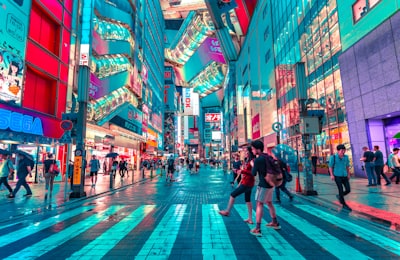
Shibuya Crossing needs to be seen at rush hour, not as an ambient backdrop. Around 5pm to 7pm on a weekday, the volume of people crossing from all directions simultaneously is something no description fully captures. Watch from the second floor of the Starbucks across the street or the observation terrace at Shibuya Sky.

teamLab Planets in Toyosu is one of the most technically serious art installations running anywhere. Six large rooms using projection, mirrors, water, and light build environments that feel genuinely hard to explain in photographs. It always sells out. Book at teamlab.art well before your visit.
Tokyo Skytree stands at 634 metres, the world's tallest tower. The Tembo Deck at 350 metres gives views across the entire Kanto plain. On clear winter and spring mornings, Mount Fuji is visible on the horizon. The Tembo Galleria at 450 metres adds a glass-floored walkway if you need to test your nerve.
Tsukiji Outer Market still operates as the city's most concentrated stretch of seafood stalls, knife shops, and early-morning sushi counters, even after the wholesale market relocated to Toyosu. Arrive between 6am and 7am. Eat breakfast at one of the sushi counter sets. It will be the best value meal you have in Tokyo.
Meiji Shrine sits inside 70 hectares of wooded grounds in the middle of Harajuku. It was built in 1920 and the forested approach path, the Omotesando, runs for nearly a kilometre through old-growth trees to the main hall. Outside major festival dates, it is peaceful and worth an hour of any itinerary.
A day trip to Kawaguchiko (the Fuji Five Lakes area) takes about two hours by direct bus from Shinjuku Expressway Bus Terminal. The views of Mount Fuji across Lake Kawaguchi are among Japan's most iconic images and they are real in person, genuinely worth the trip. Go on a clear weekday. Avoid the weekend, when the lakeside fills with tour groups.
Odaiba is worth a half-day for the waterfront views of Rainbow Bridge and the Tokyo skyline, the Gundam statue, and the teamLab digital art facilities. Access by the elevated driverless Yurikamome monorail from Shimbashi gives good elevated city views as a bonus.
Culture and Etiquette
A few things about Tokyo that are worth knowing before you arrive.
Remove shoes when entering any space with tatami flooring: traditional restaurants, ryokan accommodation, and many temple interiors. There will be a step or shoe rack at the entrance. This is not optional.
Eating while walking is considered rude outside of festival contexts. Street food from market stalls is eaten standing at or near the stall. Convenience store food is eaten outside the store or inside at the standing counter.
Queue discipline is absolute. On train platforms, passengers queue at marked spots and let people off before boarding. Do the same.
Silence on public transport is standard practice. Phone calls are not made on trains. Music is listened to through earphones only.
Tipping is not done in Japan and can cause awkward confusion. This applies to restaurants, taxis, hotels, and everything else. Service is simply expected to be good. It is.
Rubbish bins are scarce. Japan has almost no street-level bins. Carry a bag for your litter until you reach a convenience store, which will have a bin near the entrance.
What to Eat in Tokyo
Ramen is the entry point and Tokyo-style, a clear soy or chicken broth with thin straight noodles, is a specific regional style distinct from Sapporo's miso or Hakata's tonkotsu pork. Afuri in Ebisu does a light yuzu ramen worth going out of your way for. Budget 900 to 1,500 yen per bowl.
Sushi runs from 130-yen conveyor belt plates at Genki Sushi to omakase counter experiences costing 50,000 yen and above. The middle ground, a counter sushi lunch set for 3,000 to 6,000 yen, represents some of the best-value fine dining in the world. Walk into Tsukiji Outer Market at 7am and find a counter with a short queue outside.
Yakitori under the rail tracks in Yurakucho, near Ginza, is one of Tokyo's best experiences for a specific reason: the skewers are good, the beer is cold, and the trains rumble overhead every few minutes. There is no atmosphere like it in the city.
Tonkatsu at Maisen in Omotesando is the reference version: thick-cut heritage pork, light panko crust, served with a small bowl of ground sesame to mix with the dipping sauce. Lunch sets with rice, miso, and pickles run around 1,800 to 2,500 yen.
Convenience store food deserves serious mention. Japanese konbini operate at a quality level that makes the concept elsewhere seem embarrassing. Fresh onigiri, hot oden, matcha pastries, and reliable sandwiches from 7-Eleven, Lawson, and FamilyMart fuel Tokyo on a daily basis. You can eat well for under 1,000 yen per meal if you need to.
Getting to Tokyo: Cheap Flights and Airport Guide
Tokyo is served by two international airports.
Haneda Airport (HND) is 14 kilometres south of the city. The Tokyo Monorail reaches Hamamatsucho in 18 minutes. The Keikyu line reaches Shinagawa in 11 minutes. Haneda handles a growing share of international long-haul traffic and is the better arrival point for most visitors: closer, faster, simpler.
Narita Airport (NRT) is 60 kilometres east of Tokyo. The Narita Express (NEX) runs to Shinjuku in about 80 minutes. The Keisei Skyliner is faster for central Tokyo, reaching Ueno in 41 minutes at a lower fare. Most long-haul international services still land at Narita, so you will likely use it at least once.
Airlines serving Tokyo include Japan Airlines (JAL) and ANA from most global hubs, Singapore Airlines and Cathay Pacific from Asian connection points, Korean Air and Asiana via Seoul (often among the best-priced routings from Europe and North America), and Emirates, Qatar Airways, and Finnair from their respective hubs.
The two price peaks are cherry blossom season (mid-March to mid-April) and Golden Week (late April to early May). Book three to four months out for either. The cheapest windows are January to February, September to October, and late November. Routing through Seoul Incheon (ICN) or Kuala Lumpur (KUL) often produces significantly cheaper long-haul fares than direct services from the same origin city, sometimes by several hundred dollars.
Search and compare flights to Tokyo on Farefinda to see current fares across all airlines into both Narita and Haneda.
Practical Tips
Visa: Citizens of over 60 countries, including the US, UK, EU nations, Australia, and Canada, enter Japan visa-free for up to 90 days for tourism. Check the current entry rules via the Japan Ministry of Foreign Affairs before travel, as Japan has been reviewing tourist entry requirements in response to overtourism pressure at certain sites.
Getting around: Get a Suica or Pasmo IC card at any airport station on arrival. Load it with yen, tap in and out at every gate. It works on every train, bus, and subway line in Tokyo and doubles as a payment card at convenience stores. The JR Pass is worth buying before you leave home only if you plan to travel to other cities by Shinkansen.
Cash: Japan is still heavily cash-based. Smaller restaurants, temples, and traditional shops often do not take cards. ATMs at 7-Eleven stores and Japan Post offices reliably accept international cards where bank ATMs sometimes do not.
Connectivity: eSIM from Airalo or Ubigi is the simplest option if your phone supports it. Alternatively, pocket WiFi router rentals at the airport cover the whole country and are returned at any airport on departure.
Safety: Tokyo is one of the safest major cities on earth. Petty crime is genuinely rare. Women travelling alone report feeling more comfortable here than in most cities they have visited. Basic common sense applies, but worry is not warranted.
Give Tokyo at least a week. Two weeks with a few days outside the city is better. The city takes time to read, and it rewards patience in a way that few destinations do.
Emily writes destination guides and family travel content, with a focus on Caribbean routes, resort destinations, and practical trip planning.